
Alessandro Squitti, Showdown Through Writing, Cinema, and Poker
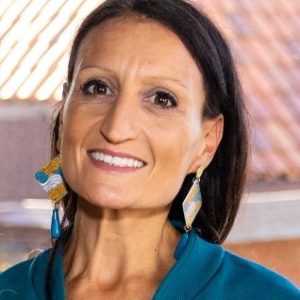
University professor, freelance editor, film producer, and poker player. When asked which job best defines him, Alessandro Squitti declines and quotes Federico Fellini: “an artisan of the craft.” Born in Rome and having been a San Francisco resident for over twenty-five years, Squitti has built a multifaceted career between California and Italy, putting together the visual language together with a passion for storytelling in a journey that reaches its peak in the novel “Tutto fa bluff” (Everything is a Bluff), published by Libreria Pino.

From Sapienza to the San Francisco Dream
Squitti’s story begins in Rome. During his university journey at La Sapienza, he paid for his studies by working for over seven years as a promoter organizing nightlife events, theater shows, and cultural festivals. In 1999, he earned his degree in Film History and Criticism with a thesis dedicated to American director Kathryn Bigelow, known for movies like Point Break and Strange Days. Meanwhile, a young Squitti took his first steps in the field, working as a runner and production assistant on the set of director Eros Puglielli and collaborating, in 1997, on the making of a short film and a music video with singer and rapper Jovanotti. During the graduation year, in 1999, he flew to San Francisco for the first time to conduct research for his thesis. «I wrote my thesis in '99 on Kathryn Bigelow and, even though I didn't end up finding her, that was the exact year I fell in love with San Francisco», the author recalls. Thanks to the dual citizenship through his mother's New York roots, and taken by California's energy of the new millennium, he decided to move permanently to the United States.
Having been familiar with graphic design and Photoshop since 1995, an intuition struck him in San Francisco about the potential of the digital revolution applied to editing, prompting him to experiment with early software versions like Final Cut Pro and Premiere. This is how his academic journey began: an entry-level job as a lab technician in the animation department at the Academy of Art University. From that position, his growth was steady: he began teaching and helped found the Visual Development department in 2013, which grew to 600 students during its peak years. He also co-founded the production company Red Clover Studios alongside director Nicolás Villarreal, with whom he continues to regularly produce animated shorts and live-action projects. More than a quarter-century spent between teaching, freelance editing, and maintaining a strong, unbroken connection between California and Rome.
The Novel, the Intersection of Three Worlds, and Poker
Today, this amount of experience culminates in a novel of about 47 thousand words. “Tutto fa bluff” is a book written out of an inner need at age 53, without any desire for fame or easy money; rather, it comes from pure expressive necessity and the intersection of three things Squitti knows best: cinema, teaching, and poker.
His relationship with playing cards traces back to childhood. «Poker has deep roots for me. My grandmother was the first to put a deck of cards in my hand to keep me quiet, since I was hyperactive, and she taught me scopa and briscola. Then came the five-card games with relatives during holidays, until at 14 or 15 'the adults' invited me to sit at their table for the first time and play until four in the morning: I finally turned into an adult. For years, I lived with it somewhat self-consciously due to stereotypes about gambling; today I claim it as a great school of psychology and a discipline of focus».
For the author, unpacking the prejudices that still surround this world is fundamental: «Poker is a beautiful game of skills where luck matters very little in the long run. People imagine green felt tables filled with smoke and shady characters; then you find surgeons, lawyers, university professors. It is a perfect metaphor for life and the choices we make every day». This discipline is directly reflected in the novel’s protagonist, Marco Caldiron. His surname is a homage to Orio Caldiron, Squitti’s thesis advisor at Sapienza and former director of the Centro Sperimentale, though the character is not pulled directly from reality. «This character is a mix of many professors and intellectuals I've met throughout my life, including those whom I crossed paths within clubs or at the Las Vegas tables», Squitti explains. «Caldiron plays poker not for the money, but to suspend time and desperately live in the absolute present».
Game Structure and Cinematic Editing Technique
The book is conceived in four sections that mirror the key phases of a Texas Hold 'em hand: Pre-Flop, Flop, Turn, and River. The writing technique reflects film editing, a craft Squitti has practiced and taught for decades. «I am an editor; therefore, when I write, I think in shots and cuts», he reflects. «An editor knows when to remove something, knows that what is left unsaid, or a frame cut a second early, creates tension. In the book, I used that exact same technique: measuring out what to reveal and what to withhold from the reader».
The work is not structured as an action thriller, but rather as an introspective psychological noir. The narrative centers on the dilemma of looking versus pretending not to see, becoming an investigation into the concept of the bluff itself. For Squitti, the bluff is the true villain of the story and represents an inescapable element of human nature. «Think of Pirandello’s masks that we put on every day as soon as we step out the door: all of us end up bluffing at least once a day, in work as in relationships. If at the poker table the person who tells the most believable lie is rewarded with the pot, in real life the protagonist Marco Caldiron ends up becoming a victim of his own bluff, unable to look at his own reflection in the mirror».
Throughout the book, the main protagonist undergoes a profound evolution, noted also by another key character, a student named Gaia. Caldiron shifts from a detached third-person style typical of academic non-fiction to finding the courage to sign his own name in the first person to a new book dedicated to Luchino Visconti, finally putting himself at the center of his work.
Auteur Cinema, Memories of Fellini, and 1990s Rome

A deep passion for cinema pulses in the background of the story. Squitti maintains a daily ritual of watching a movie or TV series, or reading a book, as a form of mental training. Woven into the text are homages to Visconti, Antonioni, Bertolucci (with his 1900), all the way to groundbreaking films like Elio Petri's Todo Modo, a work the author considers contemporary even fifty years later. Among his personal memories, an anecdote surfaces involving Federico Fellini and his La Dolce Vita: the little girl on the beach who waves goodbye to Marcello Mastroianni in the famous ending was played by Valeria Ciangottini, who at the time was the 15-year-old best friend of the author's aunt. It is a detail Squitti chose to embed within the pages as a tribute to that family memory.
All these influences converge on the cover of the book itself: «Cinema doesn't just remember the past, it keeps it alive, and there is a big difference. Cinema from 50 years ago keeps the spirit and current relevance alive because well-made films, even if people spoke differently in the dialogue, capture the human spirit, solitude, real things,» Squitti notes. This prompts a reflection on the Italian education system: «While I agree with studying Latin and Greek in high school, I ask myself why film history and theater history aren't taught as well. It's something I've always wondered about and never found an answer to».

Another major protagonist in the narrative is his home city of Rome: not today’s tourist capital, but the nightly, authentic city the author experienced until age 26. «When I write about Rome, I write about it as if I truly lived it until 5 or 6 in the morning», he says. «After work, I would go grab a warm croissant. Back then, places closed very late. In the '90s, nightlife in Rome was a completely different existence: that authentic Trastevere that perhaps no longer exists is what I wanted to capture in the book».
The Creative Process, the Meaning of a Signature, and Future Plans
Regarding the origins of his writing process, Squitti found common ground in Dacia Maraini’s research method, an author he met in San Francisco during one of her American tours: «I write constantly, non-stop. I take notes listening to people talking on the street and use my phone to record ideas. I do a lot of research first, and then step by step I move forward. I really liked an interview Dacia Maraini gave where she said it takes her years to write a book: a year and a half of research and six months of writing. I relate to that method a lot».
When pressed on whether this novel could have started as a screenplay for an indie film, the author clears up any doubt: «I didn't conceive it as a film; I thought about it entirely as a book. Later, if a talented screenwriter sees a film in it and adapts it, I'd be happy. I wrote it thinking of a book: that was the medium I needed to use». And once published, it is a chapter without second thoughts or nostalgic urges to revise. Squitti likes to explain this concept to his students using an artistic metaphor: «I wrote this now that I'm 53; if I had written it at 23, it would have been a completely different story. The reason paintings are signed is because the signature means the painter has finished that piece. For me, it's the same: once it goes to print, it's a finished thing for me. Never look back, because there is always something you could tweak. What matters is that the message lands and gives the reader something to think about»,
Now the book begins its journey among readers, with plans to present it at the Turin Book Fair in May 2027 and full openness to a future English translation. Meanwhile, Squitti reveals he is already casually working on the sequel: «I found a great twist to tie up a couple of loose ends from the first book. As for the rest, I'm in no rush: I have my job and my projects; writing is a passion. In reality, I don't view myself as an artist, I consider myself more of a creative person who develops ideas. As Fellini said, an artiisan of the craft».


Comments